If you're going to launch a brand-new business in 2026 and create a website for it or consider redesigning an existing one — one question stays in your mind forever: "On which platform should I develop my website?"
Well, there are three main options in this situation — WordPress, Shopify, and Custom Website Development. Each of those has its own advantages, disadvantages, and peculiarities. However, most of the people just choose a platform, based on a single criterion of popularity. And the result is often regrettable: a slow loading website, problems with scaling, or sky-high monthly expenses.
So, in this blog post, we'll conduct an extensive analysis of all those three platforms: from the technical perspective, from the business perspective, SEO-wise, and long-term cost-wise. Having worked with WordPress, Shopify, and custom website development myself on numerous client projects, this post is written from my experience so you could make a conscious decision in 2026.
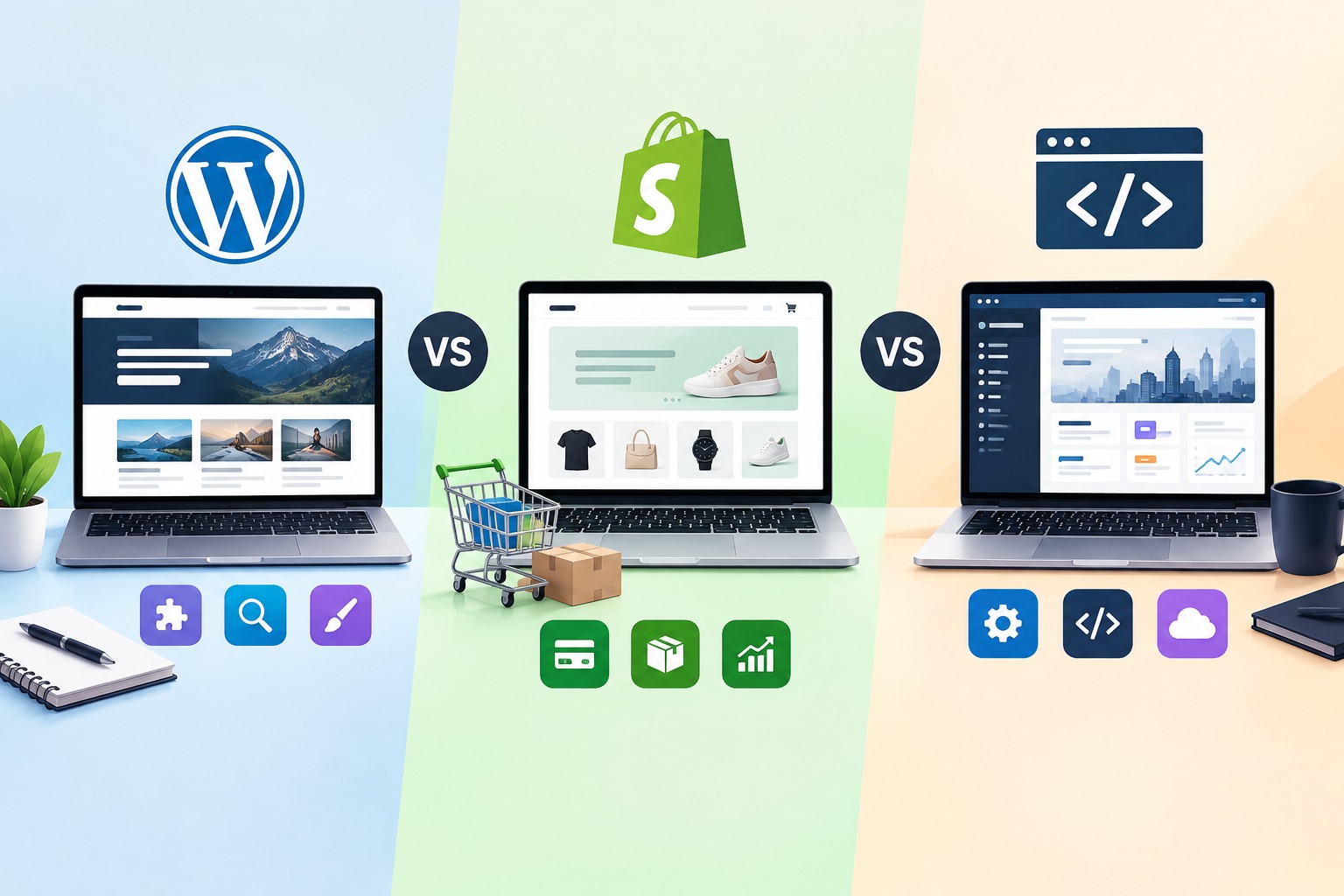
Before starting our comparison of WordPress, Shopify, and custom development, let's understand what these platforms are.
WordPress is an open-source Content Management System (CMS) powering about 40%+ of websites in the internet. WordPress can be used for blogging, business websites, portfolio websites, and small-medium-sized online shops with the use of WooCommerce plugin.
Shopify is a dedicated e-commerce platform for creating online stores. Shopify works according to the Software as a Service model, so you don't have to bother with such things as hosting, security, or maintenance yourself.
Custom Website is a website created from scratch by the development team exactly according to your needs without using any of the pre-made CMS or platforms (or created in a headless architecture).
Let's analyze each of those in details.
Factor | WordPress | Shopify | Custom Website |
| Best For | Blogs, business websites, small-medium sized e-commerce | Dedicated e-commerce stores | Unique business logic, enterprises |
| Starting Cost | Low (Rs 5-30/month) | Medium (Rs 30-100+/month) | High (Rs 1,000+ one-time) |
| Ease of Use | Medium (learning curve) | Easy (beginner-friendly) | Hard (developer dependent) |
| Customization | High (via plugins/themes) | Medium (Liquid limitations) | Unlimited |
| Maintenance | Self-managed | Fully managed by Shopify | Self-managed via developer |
| SEO Flexibility | Excellent | Good, but limited on blog side | Excellent (if built right) |
| Speed/Performance | Depends on hosting/plugins | Generally fast, shared infrastructure | Best (if optimized) |
| Scalability | Moderate | High for e-commerce | Highest |
| Security | Requires manual updates | Managed by Shopify | Manual, developer-dependent
|
Let's consider some practical examples in order to understand which platform is best for you business model.
WordPress is obviously the best platform for bloggers or content creators because of its content management system, categories, tags, and SEO plugins.
Shopify is definitely the best option. Especially if you want to launch it quickly without spending any time on technical maintenance.
A combination of WordPress and WooCommerce could work in this case or you could even maintain a separate blog section next to the Shopify store.
Custom website development is the right way in this case. In case if your requirements don't meet the standard templates or you need some special integrations, dashboards or a unique system — the custom website development is the long-term solution.
WordPress is the most affordable solution to start. Then you could move to Shopify or custom website as your business grows.
The SEO landscape has changed greatly since then and such things as Google's Core Web Vitals, mobile-first indexing, and AI-driven search results (Google AI Overviews) became important.
WordPress is the most flexible platform concerning on-page SEO possibilities — you can adjust every meta tag, schema, and URL structure. However, performance SEO (such as page speed) greatly depends on your hosting and plugins.
Shopify already has taken care of such SEO elements as SSL, mobile responsiveness, or clean code, but you may face some limitations concerning the advanced customizations (custom schema types or URL structure).
Custom websites, if developed properly (especially using headless architecture, such as Next.js) can provide you with the fastest loading speed and highest Core Web Vitals scores (that is directly affecting your ranking). However, this is possible only in case if the development team considers all SEO best practices during the development process.
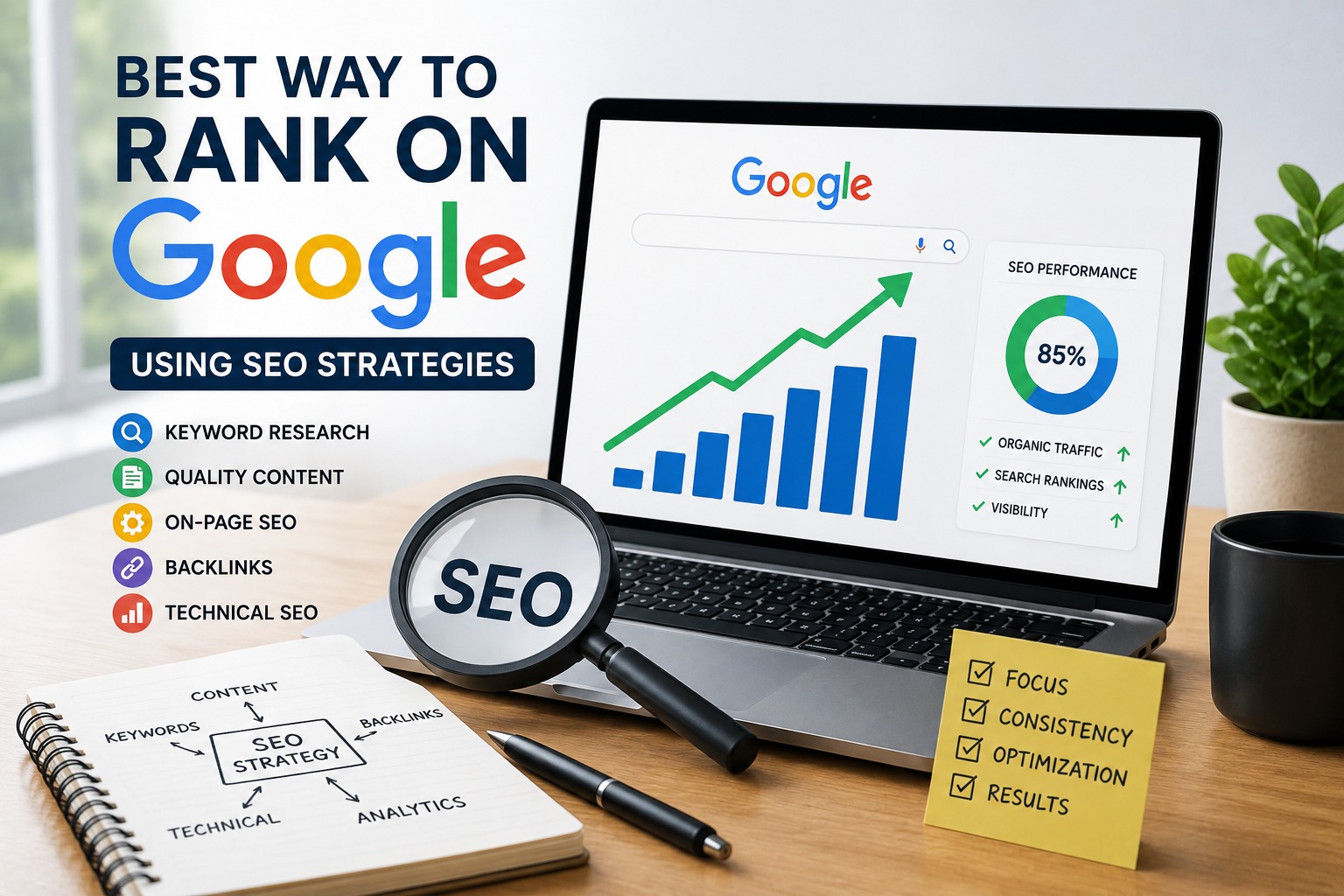
Bottom line: the SEO success does not depend on the platform, but rather on the content quality, backlinks, page speed, and user experience.
Looking at the cost only from the short-term perspective is not a right approach. Business owners should consider the cost of ownership (TCO) of a website for 2-3 years:
WordPress: Average annual cost of Rs 200-Rs 800 (hosting + themes + plugins + occasional developer help), depending on complexity. Shopify: Average annual cost of Rs 400-Rs 1,500+ (subscription + apps + transaction fees), constantly rising as you grow. Custom Website: Initial cost of Rs 1,000-Rs 10,000+ plus further maintenance cost (developer retainer), but in the long term, if your business is large, it will turn out to be the most profitable option, since there is no subscription.
Nowadays lots of companies adopt headless architecture when frontend (what users see) is separated from backend (manages data). Both Shopify and WordPress now offer headless solution that gives you flexibility and performance.
With custom websites and advanced Shopify plans you can deliver AI-driven product recommendations and personalization that could greatly increase your conversion rates.
Regardless of which platform you will use, the mobile responsiveness and quick mobile loading speed are must-haves in 2026 because of the majority of traffic coming from mobile devices.
Going with a trend blindly — choosing Shopify because "everyone else uses it" and not understanding your own business model. Not taking the long-term cost into account — looking only at the initial cost and then being shocked by the subscription or maintenance cost. Not considering SEO possibilities — not taking into account SEO potential of a platform and being surprised by the ranking issues. Not paying attention to scalability — building a small website without thinking about its further growth and then re-developing it completely.
It sounds like a simple answer could be the following:
Content-driven business or blog - WordPress Pure e-commerce website, the need for quick start-up - Shopify Unique and/or large-scale website - Custom Website
However, the correct answer is far from being simple. It depends on your goals, budget, technical skills and plans for the future. The point is that there is no universally "the best" platform. It's better if the platform suits your particular business.
So, my suggestion is the following: before making your choice, define your goals for the next 2-3 years and estimate the budget you will have. And if possible, consult with an experienced web development consultant (WordPress specialist, Shopify expert or custom development team). It's much better to avoid mistakes with wrong platform choice now than to suffer from migration later.
Q1. Is WordPress still relevant in 2026?
Absolutely. WordPress continues to evolve, introducing new features (like Full Site Editing or better performance tools). For content-driven websites, it remains one of the most relevant platforms.
Q2. Which is better for e-commerce — Shopify or WordPress + WooCommerce?
If you are a beginner and want to launch quickly, Shopify is your choice. If you need some customization with the content marketing, as well as you're ready to take care of some technical things — WooCommerce is better.
Q3. How long does it take to build a custom website?
Simple custom websites could be built in 3-4 weeks. The development of a complex platform (marketplace, SaaS product) will take 3-6 months or longer, depending on the number of features and the team size.
Q4. Is it possible to migrate from WordPress to Shopify or a custom website later?
It's possible, but migration involves additional time, cost, and SEO issues (change in URLs could affect your rankings temporarily in case if there were no proper redirects). It's better to make the right choice from the beginning.
Q5. Which platform is the most secure?
Shopify is the most secure "out of the box" since all security is maintained by Shopify. WordPress and custom websites remain safe only in case of proper regular updates and security practices.

WEBSITE99 has been designing websites, developing applications, and managing search engine optimization for the past ten years. WEBSITE99 is a one-stop shop for all your digital requirements. You name it, we've got it, premium quality at the lowest price possible.