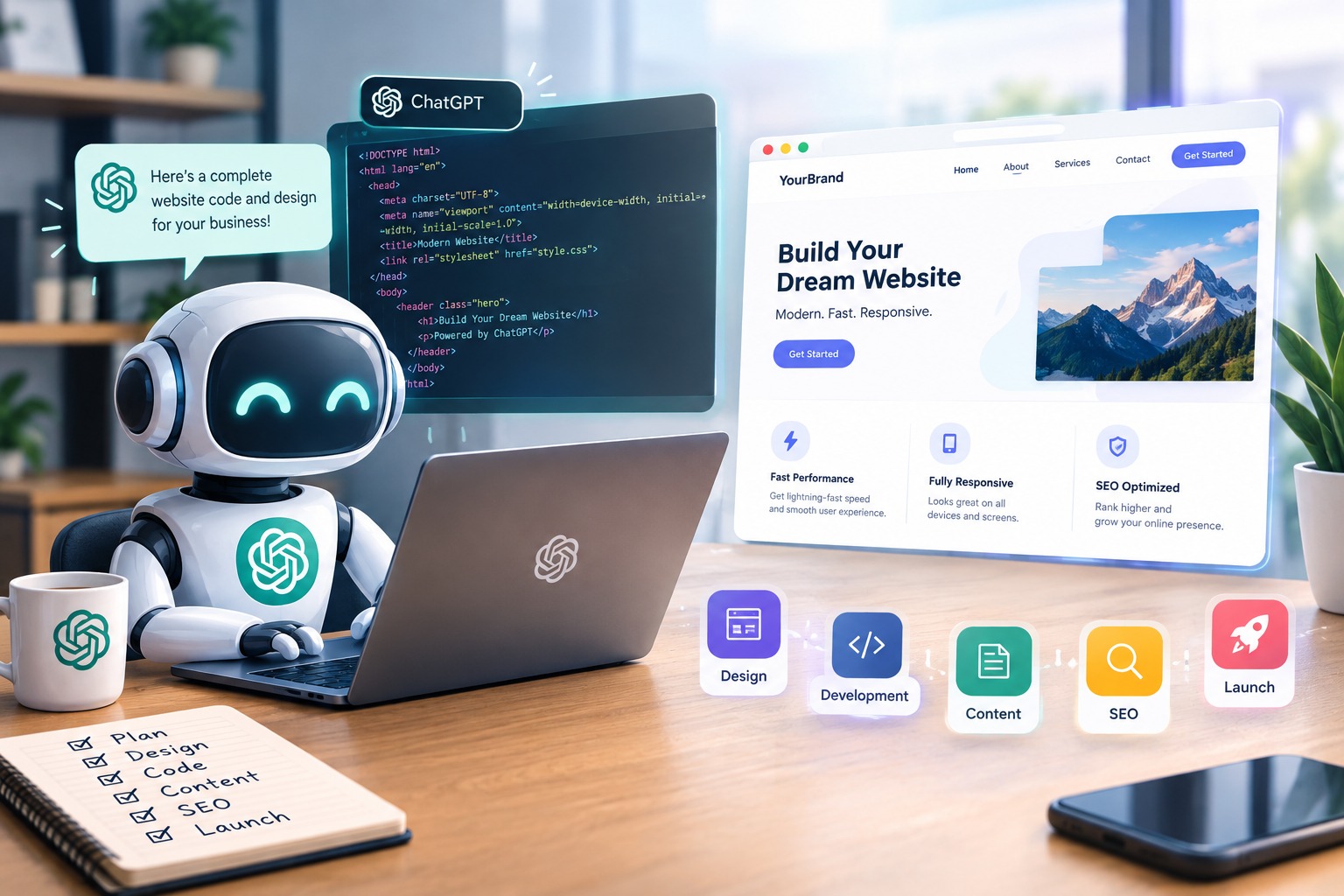
Ever since ChatGPT exploded into the mainstream, one question keeps popping up in every business owner's group chat, every freelancer forum, and every "side hustle" subreddit: "Can ChatGPT actually build my website for me?"
It's a fair question. AI tools are writing code, generating designs, and even holding full conversations about business strategy. So why not just ask ChatGPT to build a complete, professional website and skip the developer altogether?
The honest answer isn't a simple yes or no — it's somewhere in between, and that "in between" is exactly what most people misunderstand. Having personally used ChatGPT (and other AI tools) alongside traditional development workflows on multiple client projects, I can tell you that AI is genuinely powerful for website development, but it's not a magic replacement for a professional web developer — at least not yet, not in 2026.
In this blog, we'll break down exactly what ChatGPT can and can't do when it comes to building a website, how AI-assisted web development actually works in practice, where it falls short for serious businesses, and how you can realistically use AI tools to speed up your website project without ending up with a broken, unprofessional, or unranked site.
Before we go further, let's clear up a common misconception. When people say "ChatGPT can build a website," they usually mean one of these three things:
ChatGPT is genuinely useful in all three areas. But "useful" and "capable of fully building a professional, production-ready website on its own" are two very different things — and that distinction is where most of the confusion comes from.
Yes, absolutely. ChatGPT can generate:
For a simple landing page, a portfolio, or a small proof-of-concept site, ChatGPT can genuinely save hours of manual coding. It's especially useful for:
However, there's a big gap between "code that runs" and "code that's production-ready, secure, scalable, and SEO-optimized." ChatGPT doesn't test your site across browsers, doesn't check for security vulnerabilities, doesn't optimize image loading, and doesn't know your specific hosting environment. It generates code based on patterns it has learned — it doesn't actually understand your business goals, your target audience, or how real users will behave on your site.
This is the part most AI-hype articles skip over. Here's where ChatGPT genuinely struggles when it comes to full website development:
A professional website isn't just a bunch of pages stitched together. It involves database design, server-side logic, API integrations, payment processing, user authentication, and performance optimization — all working together seamlessly. ChatGPT can write snippets of each of these, but it can't architect a complete, cohesive system the way an experienced developer can, especially for anything beyond a simple site.
ChatGPT doesn't know your competitors, your customer psychology, your brand voice nuances, or your long-term business goals unless you spell every single detail out — and even then, it's working from your description, not real market research or firsthand industry experience.
A website that "looks fine" in a generated preview can still fail badly in the real world — slow loading times, broken mobile layouts, accessibility issues, or poor Core Web Vitals scores. ChatGPT can't run real performance audits, load testing, or cross-device QA the way actual testing tools and human developers do.
Security is one of the biggest risks of blindly trusting AI-generated code. ChatGPT might unknowingly generate code with vulnerabilities — unsanitized inputs, weak authentication logic, or outdated dependencies — especially if you're not a developer yourself and can't spot the red flags.
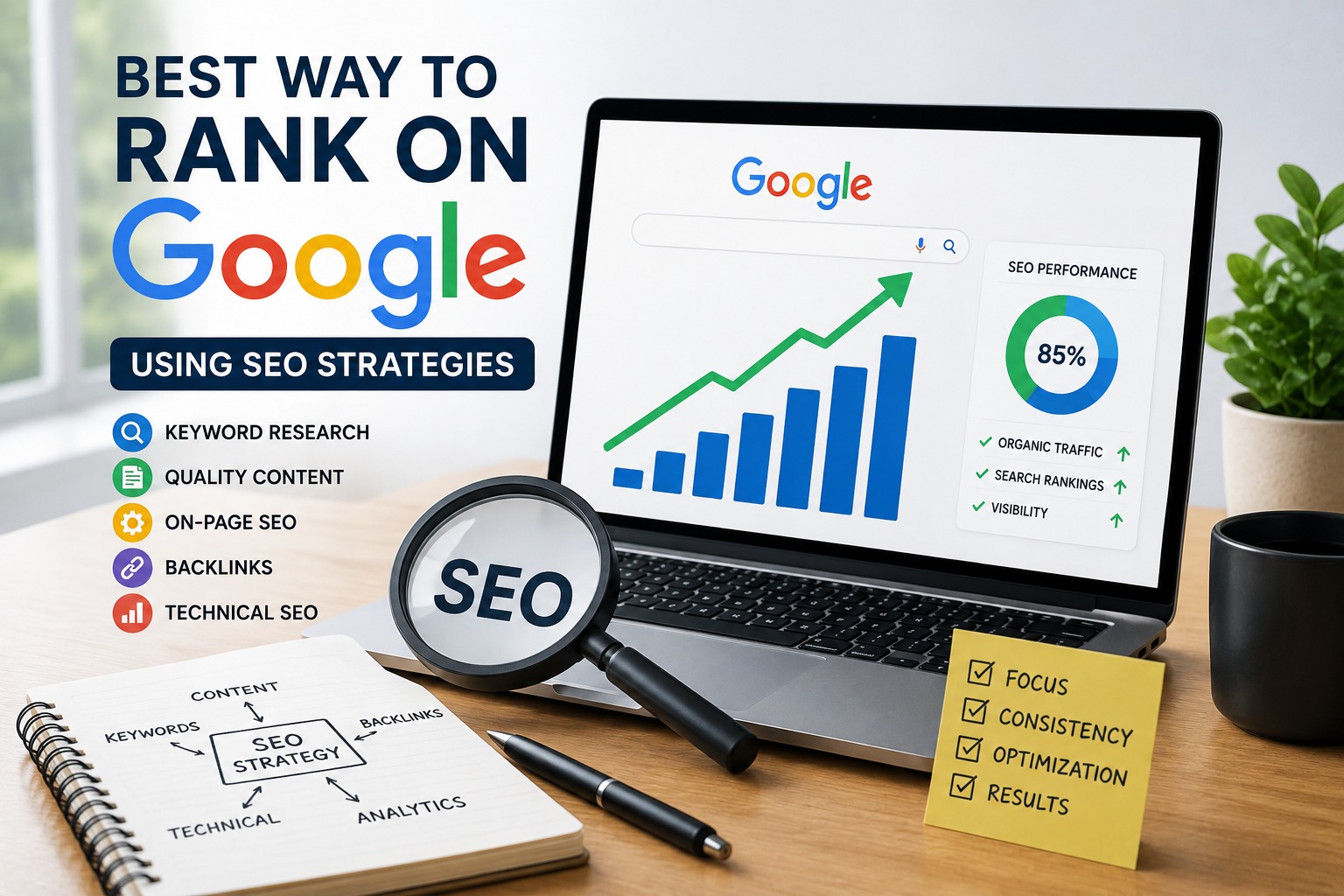
This one surprises a lot of people. ChatGPT can write SEO-sounding content, but it doesn't automatically understand technical SEO — proper heading hierarchy, schema markup, canonical tags, sitemap structure, internal linking strategy, or how Google's current ranking algorithm actually behaves. Left unchecked, AI-generated pages can end up with duplicate content issues, thin content, or structural problems that actively hurt rankings instead of helping them.
Here's the balanced truth: ChatGPT is an incredible accelerator, not a replacement. When used correctly, alongside human expertise, it can genuinely speed up multiple parts of the web development process.
1. Content Creation and Copywriting ChatGPT can draft blog posts, service page copy, FAQs, and product descriptions quickly. With proper editing and fact-checking, this content can form a strong starting point — though it still needs a human touch for tone, accuracy, and originality.
2. Ideation and Planning Need a sitemap? A list of features for your niche? Competitor analysis prompts? ChatGPT is excellent at brainstorming and organizing ideas before development even begins.
3. Code Snippets and Debugging Help For developers, ChatGPT is like having a very fast, very patient coding assistant. It can explain error messages, suggest fixes, and generate repetitive boilerplate code in seconds.
4. Learning and Prototyping If you're a beginner trying to understand how websites work, or you want to quickly prototype an idea before hiring a professional, ChatGPT is a fantastic learning tool.
5. Meta Descriptions and On-Page SEO Drafts While it shouldn't be your only SEO tool, ChatGPT can help draft title tags, meta descriptions, and alt text suggestions as a starting point that a human can then refine based on real keyword research.
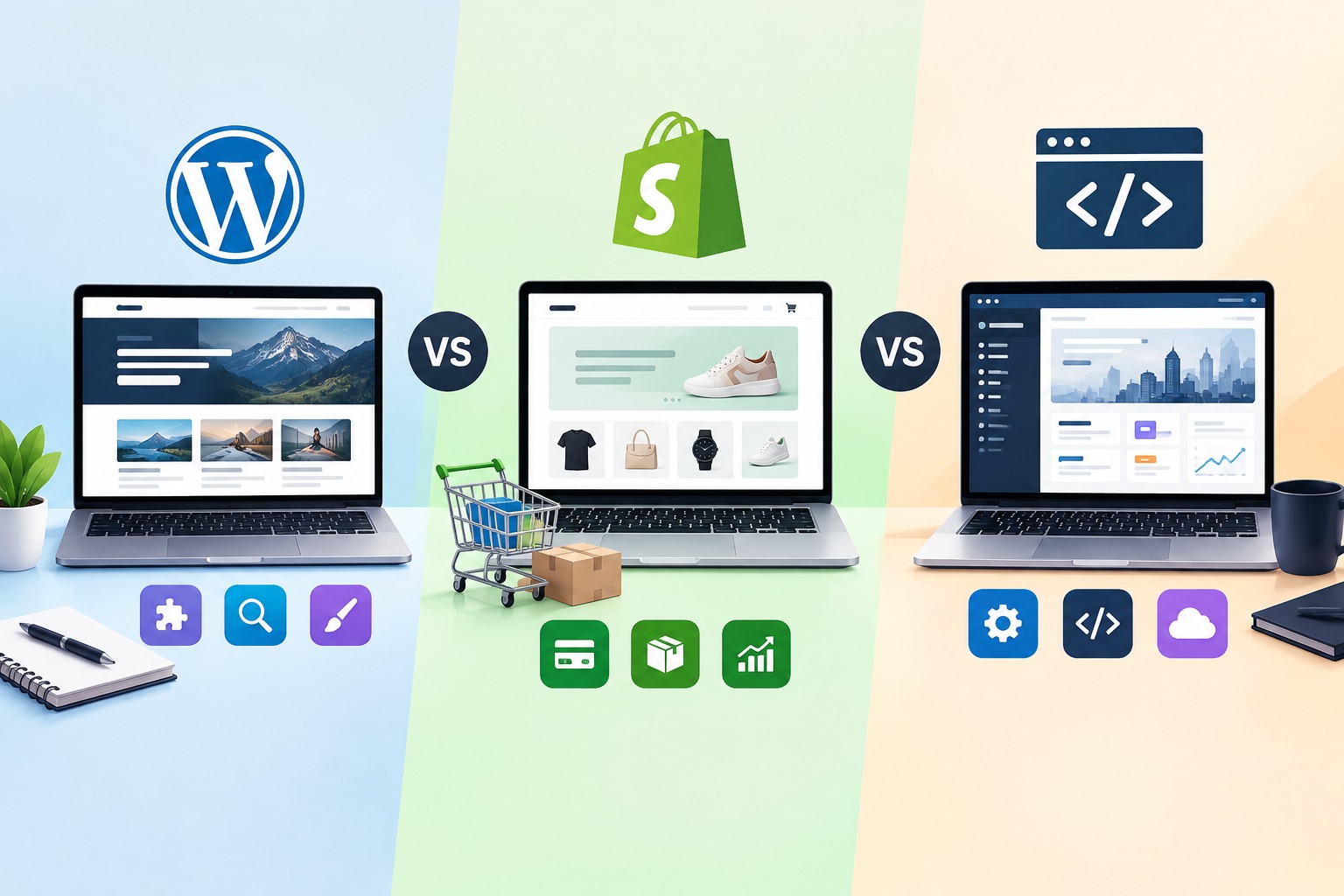
There's often confusion between "using ChatGPT to help build a site" and "AI website builders" like certain no-code platforms that use AI to generate entire websites automatically. These are different things:
AI website builders can get you to a "decent-looking site" faster than doing it manually with ChatGPT alone, since they handle hosting, responsiveness, and basic structure automatically. But they still face the same core limitations — templated designs, limited customization, generic SEO structures, and little understanding of your specific business nuances.
If you're considering skipping a professional developer entirely and building your entire business website using only ChatGPT or an AI builder, here are the real risks you should know about:
AI tools tend to generate designs based on common patterns they've learned from thousands of existing websites. The result is often a site that looks "fine" but blends in with countless others — which isn't great when you're trying to build a distinct brand identity.
As mentioned earlier, technical SEO mistakes (broken heading hierarchy, missing schema, poor site structure) can quietly hurt your rankings for months before you even notice something's wrong.
Without a developer reviewing the code, security gaps can go unnoticed until it's too late — and a hacked website can cost far more in damage control than hiring a professional upfront would have.
A site built purely through AI-generated snippets, without proper architecture planning, can become extremely difficult to scale as your business grows — leading to expensive rebuilds down the line.
AI-generated content can sometimes include factual errors, outdated information, or overly generic phrasing that doesn't reflect genuine expertise — which matters a lot for trust, credibility, and how search engines evaluate content quality.
Instead of framing this as "ChatGPT vs a developer," the smarter approach in 2026 is "ChatGPT with a developer." Here's how that actually looks in practice:
Brainstorm your sitemap, page structure, key features, and even competitor research prompts using ChatGPT before any development begins.
Let ChatGPT generate first drafts of your website copy, then have a human editor (or yourself) fact-check, personalize, and align it with your actual brand voice and expertise.
Developers can use ChatGPT to speed up repetitive coding tasks, but the final code should always be reviewed, tested, and optimized by an experienced professional.
For anything beyond a simple landing page — especially eCommerce sites, booking systems, or content-heavy platforms — proper architecture, security, and technical SEO implementation need human expertise.
Cross-browser testing, mobile responsiveness checks, page speed audits, and security scans should always be done by a human (or dedicated testing tools), not assumed to be "fine" just because AI generated it.
To be fair, there are cases where a fully AI-assisted website (with minimal human development) can work reasonably well:
But for anything that represents your actual business, brand, or revenue-generating platform — an eCommerce store, a service business site, a SaaS product, or a content-heavy publication — relying purely on AI without professional oversight is a risky shortcut that often costs more to fix later than it saves upfront.
Google's algorithm has become increasingly focused on EEAT — Experience, Expertise, Authoritativeness, and Trustworthiness — especially after multiple core updates targeting low-quality, mass-produced AI content. This directly affects how you should think about AI-built websites:
This doesn't mean AI content is banned or penalized by default — Google has clarified that AI-assisted content can rank well if it's genuinely helpful and high-quality. The real problem is content and websites created purely for search engines with no real human expertise or oversight behind them.
Here's the honest, balanced answer:
Use ChatGPT as a powerful assistant — not as your entire development team.
It's fantastic for speeding up content drafts, brainstorming site structure, generating code snippets, and learning how things work. But for a genuinely professional, secure, scalable, and SEO-optimized website — the kind that actually represents your business well and ranks competitively — you still need human expertise involved somewhere in the process, whether that's a developer, a designer, an SEO specialist, or ideally, a team that combines all three.
The businesses that will win in 2026 aren't the ones avoiding AI entirely, nor the ones relying on it blindly. They're the ones using AI to move faster while keeping real human expertise, testing, and strategic thinking firmly in the driver's seat.
If you're serious about your online presence, think of ChatGPT as your fastest intern — brilliant at drafts and ideas, but definitely not ready to run the whole project unsupervised.
Q1. Can ChatGPT build an entire website from start to finish?
It can generate code, content, and structure suggestions, but it can't independently handle testing, hosting setup, security review, or real-world performance optimization. A complete professional website still needs human involvement at some stage.
Q2. Is it safe to use ChatGPT-generated code for a live business website?
Not without review. AI-generated code can contain security vulnerabilities or inefficiencies that only an experienced developer would catch during a proper code review.
Q3. Will using ChatGPT for website content hurt my SEO rankings?
Not automatically. Google doesn't penalize AI-assisted content simply for being AI-assisted — it penalizes low-quality, unhelpful content. If ChatGPT drafts are properly fact-checked, personalized, and enriched with real expertise, they can perform well in search rankings.
Q4. What's the difference between ChatGPT and dedicated AI website builders?
ChatGPT is a conversational assistant that generates text and code on request, while AI website builders are specialized platforms that automatically assemble a full site layout, hosting, and design based on your inputs. Website builders are faster for quick setups, but both still have limitations around customization and technical depth.
Q5. For a small business, is it better to use ChatGPT or hire a developer?
For a very simple landing page or MVP, ChatGPT alone might be enough. But for anything representing your actual brand long-term — especially eCommerce, service businesses, or content platforms — combining AI tools with professional development and SEO expertise gives far better long-term results.
AI tools like ChatGPT have genuinely changed how websites get built — making the process faster, more accessible, and more collaborative than ever before. But "faster" doesn't automatically mean "better" or "safer" for your business. The smartest approach in 2026 is to treat ChatGPT as a powerful creative and technical assistant, while still relying on real human expertise to turn that assistance into a professional, secure, and search-optimized website that truly represents your brand.

WEBSITE99 has been designing websites, developing applications, and managing search engine optimization for the past ten years. WEBSITE99 is a one-stop shop for all your digital requirements. You name it, we've got it, premium quality at the lowest price possible.