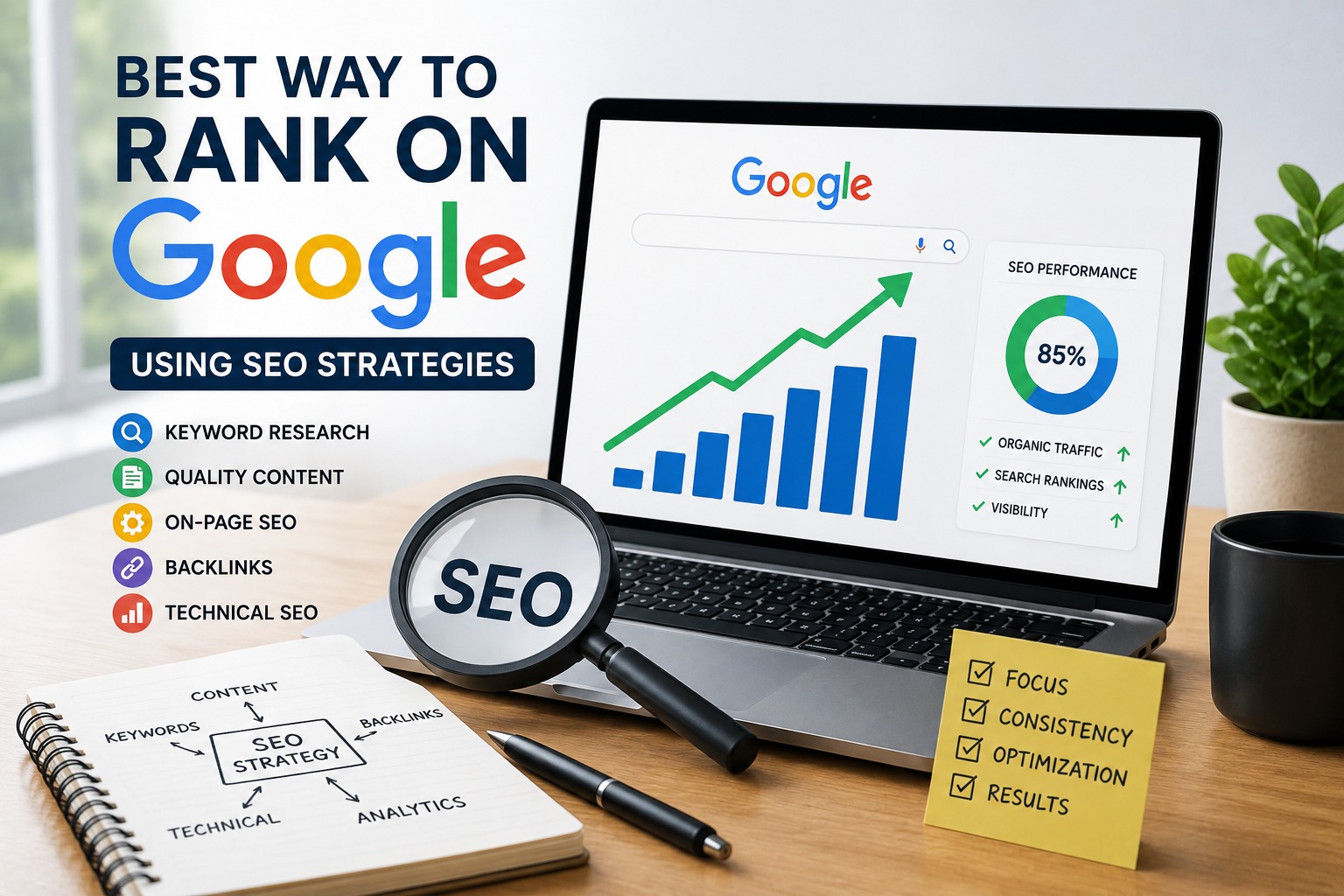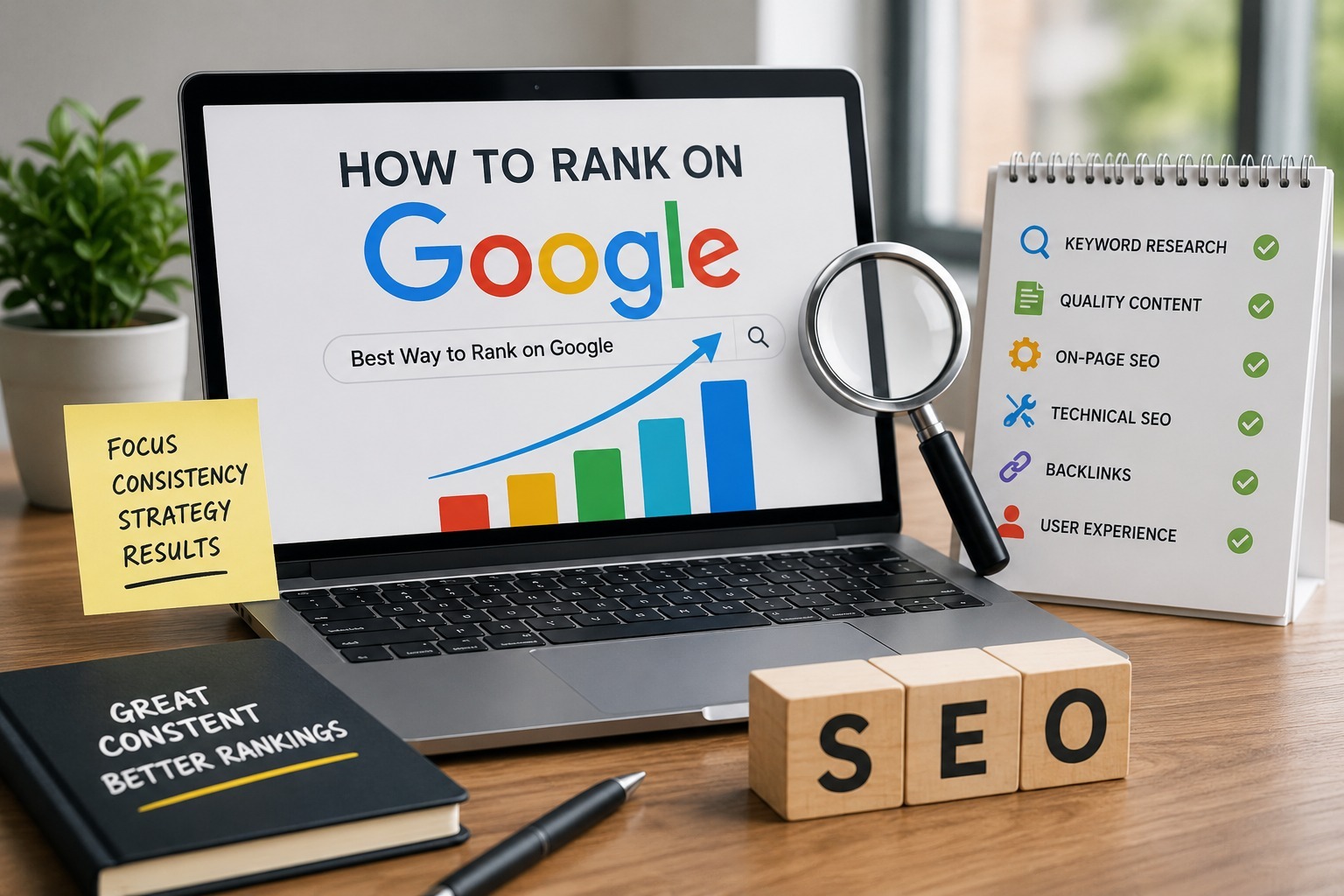
If you've been looking into ways to achieve optimal Google search ranking, chances are you've come across several dozen articles with identical recommendations about creating good content, earning backlinks and using keywords. There's nothing wrong with all of these, but it is far from everything one needs to do to reach the top search results page. This manual will provide a brief overview of the key principles which can help in getting closer to the goal.
This manual was created by an expert who has experience in managing various SEO campaigns in different niches and saw first-hand how algorithms' changes could make rankings drop instantly.
Being ranked by Google involves being featured as part of the non-sponsored search results when searching using a particular keyword, preferably at the top on the first page. Google's responsibility is to provide the most relevant information based on the keyword. Your task as the website owner is to make Google’s algorithms realize that your web page provides the most relevant information to the keyword and then convince the actual user of this fact.
Ranking is not a one-time thing. Ranking is dynamic. A web page can maintain good ranking for several months before dropping out of ranking due to competition. Therefore, ranking is more like a process than a checklist.
Google uses automated crawlers to collect and index billions of pages and employs a series of ranking systems to determine what pages should answer queries most successfully. Although the formula itself remains a trade secret, the general criteria considered by Google have been disclosed publicly: relevance of the content for the particular search query, expertise of the information provided, usability of the page (mobile-friendliness and loading speed included), and signals for the authority of the website (backlinks and reputation).
Obviously, none of these elements operate in isolation from the others. A technically flawless site with insufficient content won't get any ranking; just as much as the best-written page taking ten seconds to load and breaking at mobile won't. In other words, Google ranking factors operate in conjunction, that's why any disorganized approach, when you work on one factor but ignore the other, is doomed to be a failure.
What's more, it's important to understand right away that rankings depend on many factors: competition you face, the current authority of your site, the quality of content, technical issues, and search intent. Hence, a new site trying to rank for a competitive keyword would have a tougher job than an already authoritative site with the focus on a certain niche query – no matter whether best practices are followed or not.
Keyword research involves discovering the precise terms that your intended audience uses when searching on Google. By ignoring keyword research, you are assuming what your readers need, thus creating content that may not be searched for by anyone.
Good keyword research looks at three things:
The process of keyword research entails identifying the exact terms used by the target audience while using Google for searches. Ignoring the process of keyword research means assuming what your target audience needs, which results in writing content that nobody will search for.
Search intent is the purpose of the search – why the searcher is looking up the information. According to Google, there are four primary intents: informational (looking for an answer), navigational (looking for a website), commercial (looking to compare options), and transactional (ready to make a purchase).
Someone searching for "How to rank on Google" does not want to be sold on the services of an SEO agency. However, someone searching "SEO agency near me" wants to be sold. Creating a large informative article for transactional queries (or sales page for informational queries) is a mismatch that Google will detect when users return from your site to the SERPs because you did not provide the desired information.
Before you start writing, use the keywords and see what comes up in the search results. That is Google's way of telling you what the intent is.
This is the base for everything else. Useful content is content that actually addresses the user’s query, produced by an individual knowledgeable about the subject matter, with no fluff that has been put there solely to meet a word limit.
A few practical habits separate helpful content from generic content:
If content is useful for people, it will generate natural back links, more time spent per page visit, and even return visitors, which are strong ranking signals.
On page SEO is what you have direct control over on the page itself; such as the title tag, heading tag, meta description, URLs, images, alt text and keywords. It won’t automatically make a page rank well, but if not done correctly, they could actually stop a good page from ranking.
A solid on-page checklist includes:
Technical SEO includes all the things that make it possible for Google to crawl and index your website properly. If Google cannot crawl the page, nothing else will matter – the page won’t show up in search results at all.
Key technical SEO areas include:
Problems with technical SEO can be imperceptible to users but easily noticeable to search engines. Doing a crawl audit every few months will prevent such problems from silently undermining your rankings.
Core Web Vitals are the particular measures that Google employs for assessing real-world user experience by looking at loading speed, interactivity, and visual stability. If the page is lagging, users get frustrated, and Google has made clear that page experience is one of its ranking factors.
Practical fixes that tend to have outsized impact:
Your score can be checked via Google PageSpeed Insights or Core Web Vitals Report on Google Search Console.
Mobile-first indexing means that Google mainly crawls and indexes sites using their mobile versions. It’s pretty clear that if your website works perfectly well on a desktop and gets broken up, overlaps, or hides information on mobile phones, it does nothing for you.
Try to test out your website's most important pages on real mobile devices rather than using browser device simulators, making sure that the buttons on the page can be tapped, and the text can be read without zooming in.
Internal links connect your webpages through each other using descriptive anchor texts. There are two key functions performed by internal links: they help Google find the relation between the pages on your website, and they transfer “authority” from the strongest pages to those that are less established.
It is recommended to link from your most visited pages to your newer pages for ranking purposes, using descriptive anchor texts instead of "click here" ones. Creating a logical content cluster consisting of a main guide page connected with articles about more specific subjects usually works better than randomly placed pages.
"Backlinks, or links from other sites that point to your website, continue to be one of the most important indicators of authority for Google." However, not all backlinks have equal importance. A single link from an authoritative website is much better than ten backlinks from spam websites.
Sustainable ways to build backlinks include:
Stay away from purchasing links in bulk or participating in any form of link schemes since such practices go against the guidelines set forth by Google and may lead to penalties.
If your business targets a particular geographic region, then Local SEO needs to be taken into consideration seriously. This involves creating an optimal Google Business Profile for your business, keeping up NAP consistency and getting authentic reviews of your business from customers.
There is a difference between local pack listings ("near me") and conventional organic listings. Local listings take into account proximity, relevance and prominence a lot more than conventional listings do. A good profile can actually outrank a first-page listing when it comes to generating visits or phone calls.
Content decay is a reality — web pages that were ranking well for a year or two back now rank lower because their competitors have published more up-to-date content. In fact, refreshing your current content by updating statistics and other information can help you achieve faster results than creating new content, since your webpage will already be carrying some authority.
Your focus should be on web pages that are on the verge of ranking in the first page, but still aren't there, or pages which have obviously lost their traffic in the past several months.
Even the best-intended SEO strategies tend to fail due to some basic errors:
It’s impossible to give any strict schedule, and any promise that you will get into the top within just a few days is misleading on their part. Generally speaking, new websites/new pages for competitive keywords can take from several months to reach the results, whereas old, authoritative websites can reach results sooner.
What one should expect is to see some progress (impressions and rankings in Google Search Console) within several weeks to two months and better ranking results will continue over three-six months period or even longer depending on competitiveness of keywords and consistency in applying the strategy. Pages on old websites will reach top positions very soon due to the authority of the domain. It’s an exception rather than a rule.
Progress tracking helps ensure that your strategy is driven by information rather than intuition. The three main instruments of any effective tracking system are:
Google Search Console shows exactly which queries bring traffic to your site, your average position for each one, click-through rates, and any indexing or technical issues Google has flagged.
Google Analytics (or a similar analytics platform) shows what happens after someone lands on your page — bounce rate, time on page, and whether visitors take meaningful actions.
Rank tracking tools like Ahrefs, Semrush, or smaller dedicated rank trackers monitor specific keyword positions over time, including movement relative to competitors.
This list should be looked at on a monthly basis and not on a daily basis because these rankings change from day to day.
There is no one single magic solution for ranking on Google; it is a mix of processes that help you to build one another. Intent-based useful content acts as a base; good on-page SEO and good technical SEO ensure that your content is accessible and discoverable. Backlinks show that other users and websites find your content credible and trustworthy. Tracking and updates guarantee that your position will not slip without anyone noticing.
This process takes time, and there are no shortcuts for ranking, which will work for some time. However, this process ensures the most effective way of ranking that will last in the long term.
1. What is the fastest way to rank on Google?
There is no proven “quick” way. The nearest thing to this is focusing on low competition, niche-specific keywords, which are covered by 100 percent relevant content and good technical SEO. Existing websites, which have some authority, usually produce quicker results than new websites.
2. How many backlinks do I need to rank on Google?
There is no set number. It is much more important that the links be of good quality rather than numerous — a few good links can sometimes beat out even a dozen poor ones.
3. Does Google ranking depend only on content quality?
N. Quality content matters, but website health, loading speed, mobile responsiveness, and backlinks play an important role too. Even a well-written article hosted on an unhealthy website with poor loading speed and mobile design can do worse than its competitors who cover all aspects.
4. How often should I update old content to maintain rankings?
Check back on your top performing and page one content every three to six months. You can update statistics that may have become outdated, include new sub-topics that competitors have covered, and better organize your pages.
5. Can a new website rank on Google quickly?
A new website could achieve quick rankings for low competition keywords, but more competitive terms will take time because the competition is already building its reputation. Consistency and patience are key rather than any individual strategy.
6. Is keyword stuffing still bad for SEO?
Yes. Overusing keywords will make your content difficult to read, as well as result in a ranking penalty. Google’s system is designed to understand contextual meaning and synonyms, therefore naturally writing about your subject matter is more effective than repeating exact match phrases.
7. Do Core Web Vitals really affect rankings?
Google has, however, confirmed that page experience and Core Web Vitals affect the ranking but not in a way that overrides relevance and content quality. A well-performing page will fail to rank without the proper content to match the search query.
8. What's the difference between on-page SEO and technical SEO?
On page SEO relates to those things which are seen on the actual web page such as title, heading, content, and keyword optimization. The technical SEO includes all those things which form the technical structure of the website and make Google able to crawl and index your content.

WEBSITE99 has been designing websites, developing applications, and managing search engine optimization for the past ten years. WEBSITE99 is a one-stop shop for all your digital requirements. You name it, we've got it, premium quality at the lowest price possible.