Search engines have seen greater change in the past couple of years compared to what occurred throughout the entire previous decade. Google AI Overviews now appear at the top of search engine result pages, while voice assistants provide answers to inquiries even before users open their browser tabs. Furthermore, buyers commonly turn to ChatGPT or Gemini for advice instead of typing a keyword phrase in a search box. All of that can be quite intimidating for small business owners, but at the same time, it presents a tremendous opportunity.
The good news is that there is no need to spend a fortune on marketing to succeed in 2026. In fact, all you need is an effective, consistent, and technically correct SEO strategy that will prove to search engines and AI answer engines that you are an experienced and competent company. The more value and authority you provide, the better chances you have of ranking highly without spending millions of dollars on advertising.
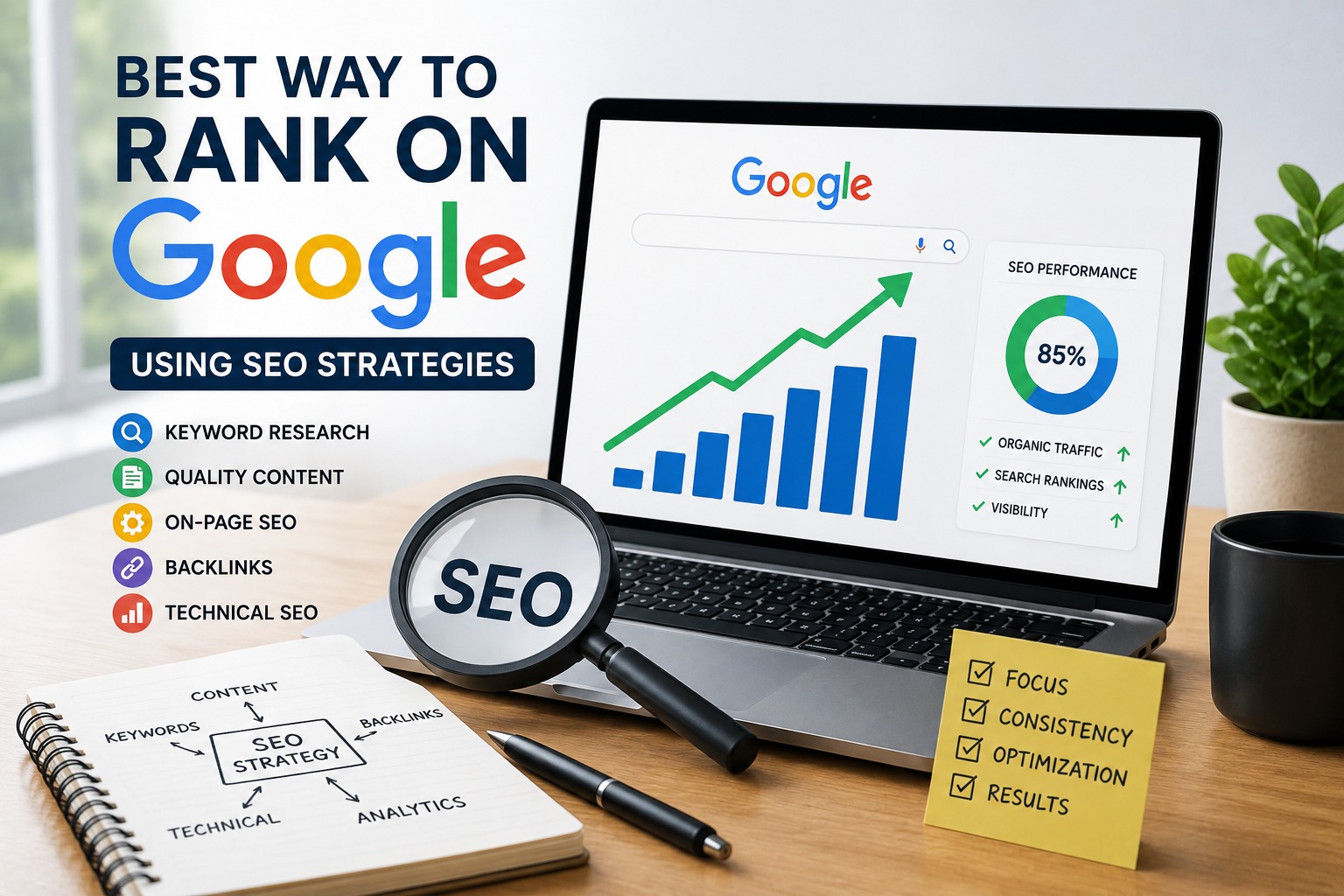
The following list of tasks comprises the whole process of improving the presence of your business in search engine results pages, AI Overviews, and conversational searches. It is a practical guide to implementing an SEO strategy that will allow small businesses to compete with bigger players, especially when agencies such as Website99, a Delhi-based digital marketing and SEO agency, come into play.
Unfortunately, there are still some entrepreneurs who view SEO as an extra measure that can be done after everything else has been covered. For 2026, this kind of thinking is not only outdated, but it is also a significant business mistake. Below are the reasons why SEO should become an integral part of any business' digital strategy:
1. Increased competition online. Now, virtually all the competitors of yours — whether it is local or even worldwide business — has their website, Google Business Page, and content strategy.
2. Growing costs of paid advertising. The cost of pay-per-click advertising keeps increasing across most industries. It still can serve as a part of a comprehensive marketing strategy, but using only ads is inefficient and expensive for the majority of small business owners.
3. Benefits of organic traffic. Unlike the paid campaigns, which do not generate traffic when the campaigns are over, SEO provides benefits for months and years to come.
4. Additional trust and credibility. Organic search results are more credible to consumers than the sponsored posts.
5. Better lead generation. Traffic from organic search is highly targeted because people who are looking for information on best plumber near me or affordable accounting software for startups are closer to making the decision to buy.
Businesses that consider SEO to be an essential long-term strategy are the ones who are conquering the market share in 2026.
Here is the full list, step by step:
First of all, ensure that the very basics are implemented before you start the optimization process.
[ ] Google Search Console – Verification of your website and monitoring the indexing process, search queries, and technical issues.
[ ] Google Analytics 4 (GA4) – Tracking traffic sources, user behavior, and conversion rate.
[ ] Bing Webmaster Tools – Bing (and its AI-driven Copilot search feature) still brings relevant traffic, especially in B2B niches.
[ ] XML Sitemap – Submitting your sitemap in order to ensure that all the pages will be discovered by search engines.
[ ] Robots.txt – Ensuring that there aren’t any blocks of crucial pages from crawling.
[ ] SSL Certificate – Your website has to operate on HTTPS; that’s the very first trust factor.
[ ] Mobile-Friendly Design – Due to the mobile-first indexing, the mobile version of your website should be properly optimized.
Imagine this point as the building of the foundation of the house. Without it, the rest of the things will be unstable.
Keyword research in 2026 isn’t really about targeting high volume; it’s all about understanding the intent behind the searches.
Target intent-based keywords. Search terms such as buy, near me, pricing, best, vs, or [specific need] indicate high intent to take action.
Conduct local keyword research. Mix your service keyword with your location keyword—e.g., "wedding photographer in Delhi," instead of just "wedding photographer."
Use long-tail keywords. "Affordable CRM software for small retail stores" is much easier to rank for, and it’s likely to perform better compared to shorter, broader terms.
Check out your competitor keywords. With tools like Ahrefs and Semrush, you can find keywords that your competitors are ranking for. It will save you some time!
Figure out the search intent. What is the person searching for—information, comparison of products, or transaction? Align your page accordingly.
A properly structured website is beneficial for both users and search engines to better understand what your business is about.
Create SEO-friendly URLs. It means that the URL should be concise, readable, and contain a keyword (e.g. services/local-seo, not page?id=482).
Establish robust internal linking. By connecting related pages you allow both users and crawlers to naturally navigate through your website.
Make navigation simple. Users must be able to get to any important page in three clicks maximum starting from the main page.
Provide breadcrumbs. Breadcrumbs make the site more user-friendly and usually displayed right in Google search results.
Structure your categories logically. Particularly important for eCommerce websites with big catalogues.
On-Page SEO is one of the most impactful and least expensive areas for improvement.
[X] Title Tags. Include your primary keyword at the beginning of the title tag; keep it shorter than 60 symbols.
[X] Meta description. Write an attractive meta description (maximum 155 symbols) which would increase click-through rate.
[X] Structure of H1, H2, H3 tags. Use one H1 for each page and separate sub-topics using proper headings.
[X] Optimization of Images. Optimize pictures for fast loading but don't sacrifice their quality.
[X] Alt tags. Use them to provide proper alt text for the picture; it will also increase its visibility in image search.
[X] Optimization of Content. Provide comprehensive coverage of the topic by answering all possible questions that the reader may have.
[X] Natural use of keywords. Don't repeat the same keywords in different places; use synonyms and related words.
[X] Targeting Featured Snippets. Try to provide answer for common questions in 40-60 symbols directly under the H2 or H3 tag.
Google has always emphasized on creating content first for people and only then for search engines.
Develop blog strategy. Regularly publish content which answers customers' questions.
Develop topic clusters. Create article clusters based on a "pillar" page, covering the same topic.
Invest in evergreen content. Useful guides that remain relevant for years provide long-tail traffic even after publication.
Create FAQ content. Frequently Asked Questions directly correspond to the user's intentions and are highly valued by AI Overviews.
Create AI-searchable content. AI systems require the content to be concise, factual, and formatted in structured way.
Though unseen by visitors, technical SEO plays an essential role in how search engines view your website.
[ ] Core Web Vitals — Analyze loading experience, interaction, and visual stability of your website.
[ ] Page speed optimization — Minimize file size, implement caching mechanisms, and leverage CDN where applicable.
[ ] Schema markup — Add schema markup data (Organization, LocalBusiness, FAQ, Product, Review) for better recognition of your content by search engines and AI algorithms.
[ ] Crawlability — Ensure that all necessary pages are accessible to crawlers.
[ ] Indexability — Verify that no valuable pages are marked "noindex".
[ ] Canonical tags — Avoid any potential duplication issues through specifying the canonical URL.
[ ] Redirect management — Implement correct redirects; avoid chaining and redirect loops.
[ ] Broken link monitoring — Perform regular checks and fixes for all broken links (404 errors).
For small businesses, local SEO is the most effective way to see quick results from their SEO efforts.
[ ] Optimize Google My Business profile — Fill in all fields (categories, services, operating hours, photos, description).
[ ] Create local citations — Get listed in various directories such as Justdial, Sulekha, and others specific to your industry.
[ ] Maintain NAP consistency — The Name, Address, and Phone number should be consistent across all platforms.
[ ] Generate reviews — Respond to all reviews, whether positive or negative, professionally and promptly.
[ ] Create landing pages — If you operate in several locations, create a landing page for each of them.
[ ] Optimize Google Maps listings — Use targeted location keywords, generate reviews, and maintain activity in your profile through regular posts.
Although backlinks continue to be a good trust signal, their quality is much more important than their number.
Generate high-quality backlinks from reputable sites that are relevant to your industry.
Write guest posts for reputable blogs or magazines within your niche.
Get listed in reputable local directories with high domain authority.
Go for digital PR — press coverage, expert quotes, and analytical studies will bring you organic links.
Create industry partnerships — cooperation with complementary businesses will give you organic backlinks.
It is currently the latest, and definitely the most rapidly developing component of SEO strategies in 2026.
AI SEO Overviews Optimize for. Make sure that there is always a concise and direct answer located high within a section.
Use conversational SEO. Users tend to ask complete questions ("What is the best approach to...") rather than using a set of fragmented keywords.
Create Q&A content. Make the sections of your content based on the actual questions from your customers.
Ensure entity optimization. Describe your business, products, and services correctly and consistently in order for search engines to have a clear understanding of what you do.
Semantic SEO. Provide comprehensive coverage of the topic using related terms and concepts, rather than the exact keyword.
Develop topical authority. Publish consistently researched and high-quality content in your field in order to establish yourself as an expert.
GEO stands for Generative Engine Optimization, which means SEO optimized for AI-generated results. It works according to many of the same principles, but is more focused on clarity, structure, and accuracy of information due to AI summarizing the information and citing the sources.
Achieving high ranks alone doesn't mean anything – generating sales does.
[ ] Mobile optimization — Check how your website performs on different devices and screens.
[ ] Clear CTAs — Have your next action button clearly marked on all pages of your website.
[ ] Page loading time — Each extra second leads to higher bounce rate.
[ ] Ease of navigation — Decrease friction between user getting to your website and accomplishing their objective.
[ ] Optimized lead generation forms — Make sure your forms are short and don't contain unnecessary information.
Even well-intentioned business owners fall into these traps. Avoid them to protect your rankings and reputation.
| Mistake | Why It Hurts You |
|---|---|
| Keyword stuffing | Makes content unreadable and can trigger search engine penalties |
| Duplicate content | Confuses search engines about which page to rank, diluting authority |
| Ignoring technical SEO | Even great content won't rank if the site can't be crawled or loads slowly |
| Poor mobile experience | Directly impacts rankings due to mobile-first indexing |
| Buying low-quality backlinks | Can trigger manual penalties and long-term ranking damage |
| Ignoring local SEO | Means missing out on high-intent, nearby customers actively searching to buy |
You don't need every tool on this list — but understanding what each one does will help you build the right toolkit for your budget and goals.
| Tool | Best For | Free Option? |
|---|---|---|
| Google Search Console | Monitoring indexing, search performance, and technical issues | Yes |
| Google Analytics 4 | Tracking traffic, behavior, and conversions | Yes |
| Ahrefs | Backlink analysis, keyword research, competitor audits | Limited free tools |
| Semrush | Keyword research, site audits, competitive analysis | Limited free trial |
| Screaming Frog | Deep technical SEO audits and site crawling | Yes (up to 500 URLs) |
| PageSpeed Insights | Measuring Core Web Vitals and page speed | Yes |
| ChatGPT | Content ideation, drafting, and AI-search visibility testing | Yes (limited) |
| Google Gemini | AI-assisted research, content support, and Google ecosystem integration | Yes (limited) |
Wherein companies are too busy or lack the knowledge to handle this toolset, Website99 integrates all of these into one managed SEO procedure so that you can gain the benefits without the need for any learning.
Quarterly Review Checklist:
Every three months take time to look at the bigger picture:
Full tech audit – scan the website to find errors, redirecting and indexation problems.
Content audit – analyze your underperforming pages and update, merge or delete them.
Link audit – examine your backlinks and disavow toxic or spammy links.
Competitor analysis – compare your ranking, content, and link profile to your top competitors.
Local SEO audit – check NAP consistency and update your Google Business Profile.
Schema markup audit – make sure schema is used properly on the important pages of your website.
AI audit – test whether your company is visible through AI Overviews and similar tools such as ChatGPT and Gemini.
Conversion rate audit – analyze the most converting pages and use this knowledge.
Goals – create SEO goals for the upcoming quarter.
The creation of this checklist requires not only time but also tools and expertise, which are quite often lacking in small business owners. In such cases, a business partner can be helpful.
Website99 is a digital marketing and SEO company located in Delhi and offering services to small businesses, startups and local service providers in order to help them leverage the power of SEO and grow their business. The services provided by Website99 include:
SEO Services - comprehensive management of on-page, off-page and technical SEO according to your niche.
Local SEO - optimization of Google Business Profile, citation building and management of reviews in order to take the local search results.
Website Design - fast and mobile-friendly design of websites with an inbuilt SEO.
Technical SEO - optimization of Core Web Vitals, implementation of schema markup, crawling issues, and other technical optimization and monitoring of the site's health.
Content Marketing - blogs, landing pages, and topic clusters focused on keywords.
Google Ads Management - additional paid search campaigns in order to support your organic strategy.
AI SEO strategies - optimization for AI Overviews, conversational searches, and Generative Engine Optimization (GEO).
If you have no experience with SEO and need assistance with it, the Website99 will be glad to help you.
Typically 3–6 months before seeing improvements and 6–12 months to see real progress for most small businesses. Time needed might vary based on competitive nature of industry or keyword.
Yes. SEO still provides one of the highest return on investment in comparison with paid marketing because the organic traffic continues to come to the website even when promotion of the page stops.
AI SEO implies optimizing content and website in a way which would make it rank better in AI-driven search experiences including Google AI Overviews, ChatGPT, and Gemini. Emphasis is put on structure, factual accuracy, and direct answering of questions.
This can be quite flexible and vary greatly depending on scope, competitiveness of market, and region starting from few thousand rupees per month to cover local SEO for basic websites up to higher costs for national or e-commerce SEO campaigns. Agencies like Website99 usually provide several options to fit various budgets.
Yes. Many small businesses rank great organically thanks to regular content creation, local SEO and technical optimization without using any paid advertising although it could accelerate the results.
Major pages should be updated regularly on a quarterly basis while blog posts can benefit from frequent publication and updates.
Core Web Vitals are Google metrics for measuring page loading speed, interactivity and visual stability. Those have impact on both user experience and search rankings.
On-page SEO focuses on elements of content while technical SEO deals with site infrastructure which includes speed, crawlability, indexing and other.
Yes. Blog is probably the most efficient tool to target long-tail keywords, address customers' questions and build topical authority.
Very. Google reviews are one of the major signals not only for Google Business Profile ranking but for building trust and click-through rates.
It is the process of optimizing content for being cited, quoted or referred by answer engines powered by AI technologies such as Google AI Overviews, ChatGPT and other generative engines.
For most small businesses, especially service providers, it is local SEO what needs to be done in priority as it will help them to reach their nearby audience which is closer to conversion. E-commerce and B2B business might need broader approach for SEO.
Monitor organic traffic growth, improvement of keyword rankings, visibility in Google Local Packs and most importantly leads/conversions from organic search using Google Analytics GA4.
Basic SEO knowledge could be gained and applied independently while competitive keyword strategy, technical audits, and AI SEO need professional skills. Small businesses might find collaboration with SEO agencies like Website99 more beneficial.
nconsistency. Small businesses often make big step forward in SEO in beginning but give it up after few months due to lack of instant success.
Conclusion
SEO in 2026 has gone beyond the goal of ranking well on the first page of Google; now it's all about reaching your target audience wherever they do their searches, from traditional search engines to new platforms such as AI Overviews, voice assistants, and conversational searches.
The companies that succeed will be those that invest in setting up a solid SEO infrastructure, creating quality content, performing local SEO, and adapting to changes brought by AI technology.
This SEO checklist provides all the necessary elements that need to be implemented in your marketing strategy: from basic set-up and on-page SEO essentials to technical SEO, local SEO, link-building, and SEO tactics for AI and GEO. If you implement this checklist in full, analyze and improve your performance monthly and quarterly, you will build an SEO machine which will work continuously and bring you organic traffic even when your campaigns have ended.
In case you prefer not to think about SEO, but rather to run your business successfully, we can help. As a reputable SEO and digital marketing company, Website99 specializes in both technical SEO and local SEO and has the experience and knowledge required to provide small businesses with a solid SEO strategy in 2026 and later. Feel free to contact Website99 anytime to build an efficient SEO strategy for your business.

WEBSITE99 has been designing websites, developing applications, and managing search engine optimization for the past ten years. WEBSITE99 is a one-stop shop for all your digital requirements. You name it, we've got it, premium quality at the lowest price possible.